Kitchen temperature monitoring you'll actually keep up with
Timlup turns your recurring temperature checks into auto-generated daily checklists: fridges, freezers, hot-holding, blast chiller and goods-in. Tap, record and PIN sign-off from the kitchen tablet.
Auto-generated daily checklist with the recurring checks you set up PIN sign-off from any kitchen tablet, with the exact time captured Exportable history to document your records in an orderly way
What temperatures must I control in a restaurant kitchen?
In a busy UK restaurant kitchen, the core temperatures you're expected to control are clear. Your walk-in and under-counter fridges must stay at or below 5 °C, while freezers need to sit at −18 °C or colder. When you're holding hot food for service, keep it above 63 °C. Cooking is about hitting the right core temperature: 75 °C instantly, or an equivalent 70 °C for 2 minutes. And don't forget incoming deliveries — chilled goods should arrive at 5 °C or below and frozen at −18 °C or below before you even accept them.
Checking these temperatures isn't a once-a-week job; you should record them at least once a day, ideally at opening and closing, and on every single delivery. During busy service, when fridge doors are opened often, a brief tolerance of around 3 °C is realistic, but you must log it and get the temperature back down quickly. Probe placement matters: in a cold room, measure at the point furthest from the evaporator; when cooking, push the probe into the core of the food, not touching bone or the pan. For rapid cooling, your blast chiller needs to bring food from 60 °C to 10 °C in under 2 hours to stay safe.
Let's be honest: no app, checklist or template can make you 'inspection-ready' or guarantee you a top hygiene rating. Timlup simply helps you document, in an orderly way, whatever you choose to record. Every day you get an auto-generated checklist on the kitchen tablet; your team signs off with a PIN, and the exact time is captured automatically. If a check gets missed, a gentle reminder nudges the right person, and your entire history is exportable whenever you need it. The structure mirrors the kind of records you'd keep with the FSA's Safer Food, Better Business pack, so it feels familiar without pretending to be a magic wand.
Kitchen temperature control, logged
From the cold room to the bain-marie: every reading PIN-signed from the tablet.
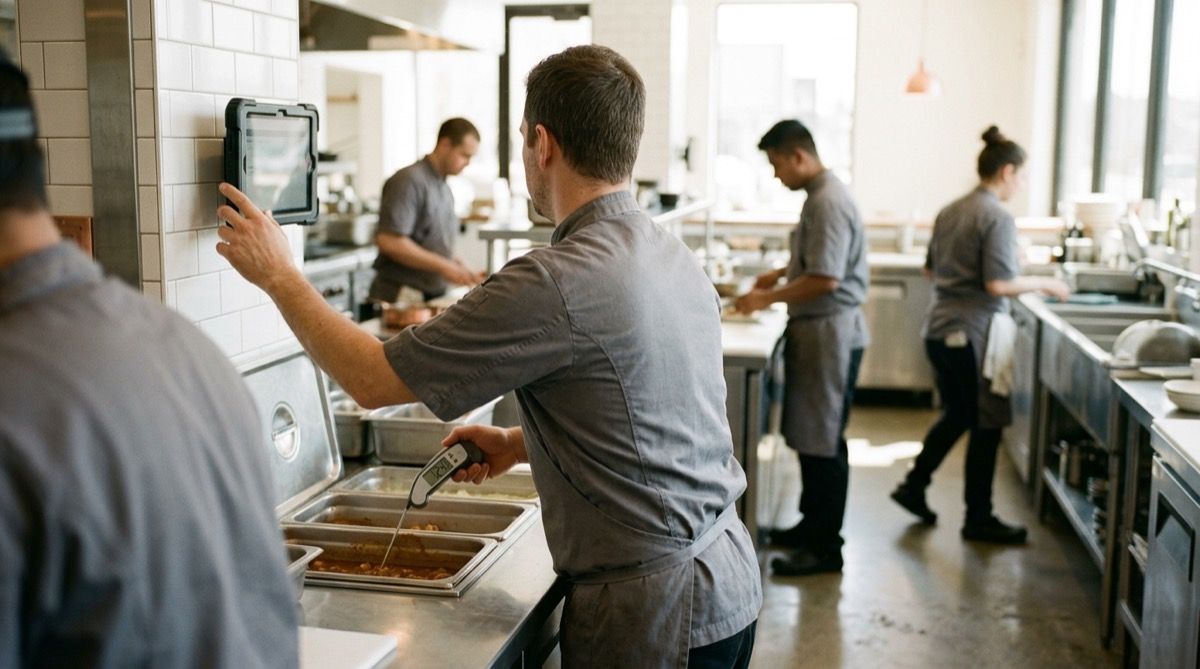
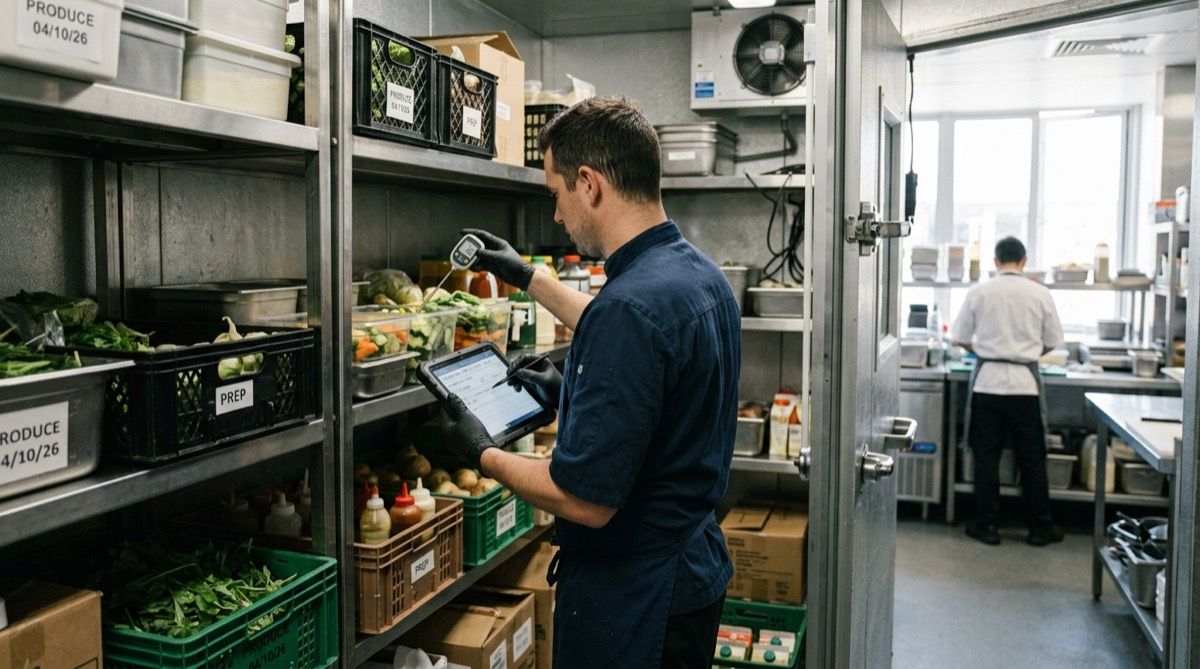
A kitchen's temperature control points, step by step
Total estimated time 12-16 min a day across goods-in, opening, service and closing. Ranges per UK food safety guidance and the FSA's Safer Food, Better Business. Temperature-logging tasks are marked.
Goods-in (delivery)
3-4 min — on every delivery, before accepting the order- 1 Probe the temperature of chilled goods on arrival (5 °C or below); reject or log an incident if the cold chain is broken 2 min
- 2 Check the temperature of frozen goods on arrival (−18 °C or below); note supplier, time and temperature 1 min
- 3 Put each item straight into its fridge or freezer so the cold chain isn't broken 1 min
Opening
5 min — first log of the day, before service- 1 Check and log the main cold room / fridge temperature (5 °C or below); probe at the point furthest from the evaporator 1 min
- 2 Check and log the under-counter and pass fridges (5 °C or below) 1 min
- 3 Check and log the freezer temperature (−18 °C or below) 1 min
- 4 Verify probes/thermometers work and are calibrated; log any issues (frost, noise, poorly sealed doors) 1 min
- 5 Visually confirm no perishable was left out of cold equipment overnight 1 min
Service (cooking, hot-holding and chilling)
3-4 min — during service, at the critical points- 1 Probe the core of cooked dishes to confirm 75 °C (or 70 °C for 2 minutes); take extra care with poultry, mince and stuffed items 1 min
- 2 Log the hot-holding / bain-marie temperature (above 63 °C); probe the food itself, not just the water 1 min
- 3 Log blast-chiller cooling: bring the core from 60 °C to 10 °C in under 2 hours; note start time, end time and temperatures 1 min
- 4 Re-check the cold room or pass fridge after repeated door openings (5 °C or below; brief ~3 °C tolerance if it recovers fast) 1 min
Closing
4 min — second log of the day, confirms the cold held all shift- 1 Check and log the closing cold room / fridge temperature (5 °C or below) 1 min
- 2 Check and log the closing freezer temperature (−18 °C or below) 1 min
- 3 Date-label opened or prepared items, store in the fridge at 5 °C or below and log the temperature 1 min
- 4 If any unit went out of range during the day, log the incident and the corrective action taken (move product, fitness check, call technician) 1 min
Your daily checklist, right on the kitchen tablet
The team completes and PIN-signs each check; you see it all from your panel.
The Grill House · Kitchen
Opening — Temperatures
due 10:00- Walk-in fridge ≤5 °C
- Pass fridge 1-4 °C
- Freezer ≤−18 °C
- Bain-marie hot-holding ≥63 °C
- Probes calibrated, log any issues
Three ways Timlup helps with temperature logging
Without ever pretending to be a compliance tool.
Recurring checklists, not random alerts
Your daily fridge and freezer checks appear automatically on the kitchen tablet, at the times and frequency you decide. No more WhatsApp reminders, no more sticky notes peeling off the walk-in door.
PIN sign-off with real traceability
Every single check is signed with the personal PIN of the team member who actually did it, stamped with the exact date and time. If you need to know what happened on a particular shift, you can find it in seconds.
Tidy history, no paper or spreadsheets
All your records are stored automatically and neatly in one place, ready to export a whole year's worth if you ever need to. No more soggy paper logs that nobody can find when you actually want them.
Your temperature logging questions, answered
Straightforward answers for restaurant owners and head chefs.
How often should I record temperatures in a restaurant kitchen?
What temperature should my fridges and walk-in cold rooms be?
What temperature should my freezer be?
What temperature should hot-holding and the bain-marie be?
What core temperature must food reach when cooking?
How do I control rapid cooling with a blast chiller?
What temperature should I check on delivery (goods-in)?
Where should I place the probe in a cold room and when cooking?
How long should I keep temperature records?
What should I do if a fridge or unit goes out of range?
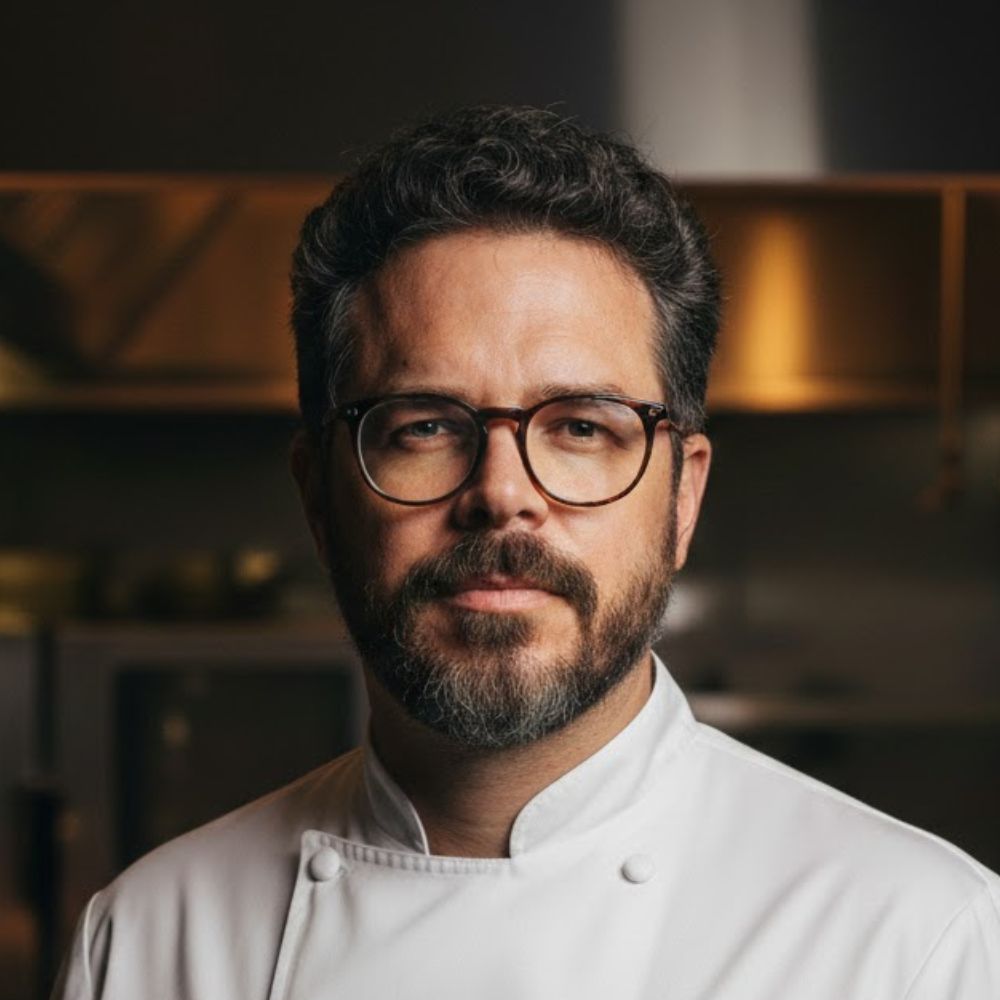
John Guerrero
Founder of Timlup · Founder of ChefBusiness
15+ years working on business operations and process digitisation. Behind Timlup, ChefBusiness and AI Chef Pro. These guides capture the daily-control procedures I see working in operations-heavy businesses across Spain.
More on restaurants
Back to the hub or explore the other cluster types.