Daily Freshness Checklists Your Team Actually Signs Off
Ensure every fresh fish fillet rests on crushed ice at 0-2 °C and every lobster stays healthy in live tanks. No paper, no forgetting — just a simple PIN on the kitchen tablet.
Monitor ice beds, live tanks, and cold storage Traceability for every seafood batch Team signs off per area — you see compliance live
How Top Seafood Restaurants Maintain Flawless Freshness
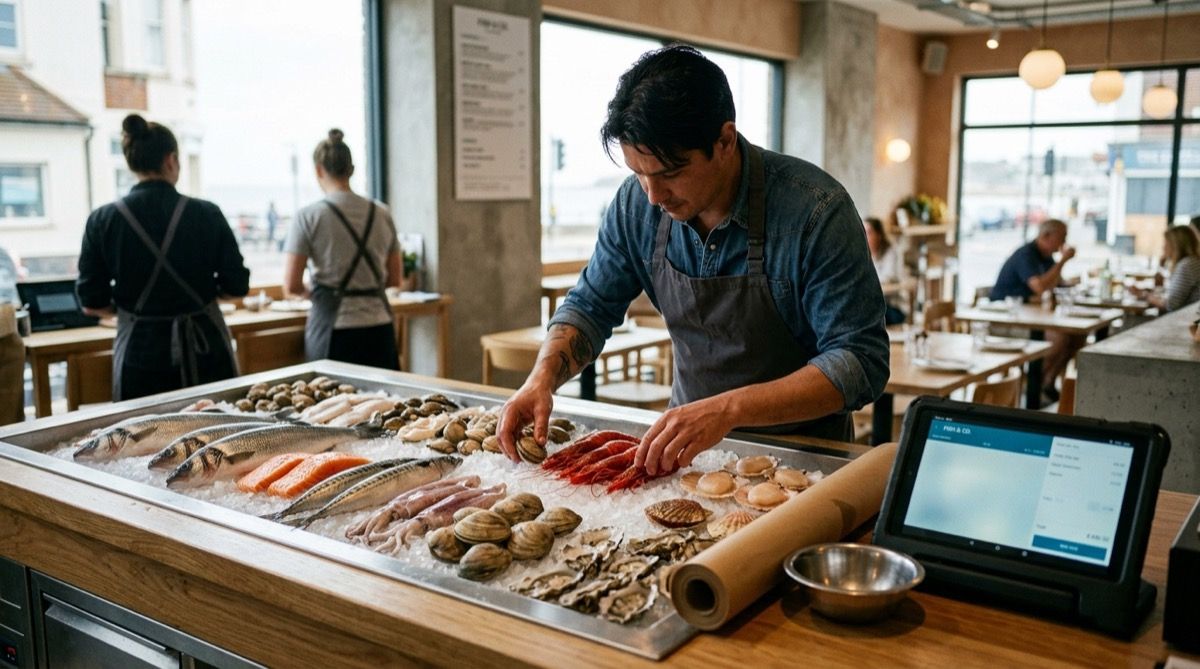
Fresh fish must sit on crushed ice at 0-2 °C from delivery to plate. Our recurring checklists guide your team through opening, service, and closing checks — every day, without fail.
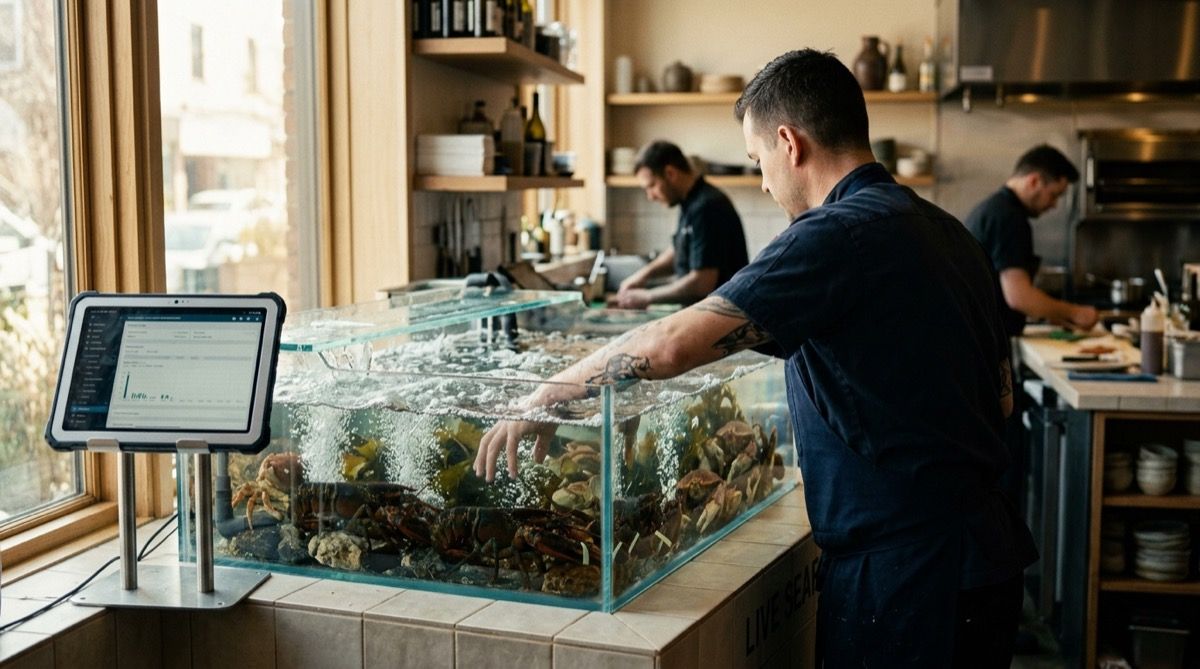
Live shellfish require a seawater holding tank at 5-12 °C with constant oxygenation and controlled salinity/pH. Timlup tasks ensure your bivalves and crustaceans never suffer osmotic shock.
Every batch carries a sanitary label for traceability. With digital sign-off, you always know who inspected the refrigerated room (≤4 °C) or the freezer (-18 °C or below) and when.
A seafood restaurant’s day, step by step
Setting the iced display, checking the live tank, keeping the cold chain: every task signed from the tablet.
Complete list of 35 daily tasks for your seafood restaurant
Stay on top of food safety, freshness and cold chain with this comprehensive daily checklist. Covers live shellfish tanks, ice displays, cooking station and more.
Opening
07:30-08:30- 1 Inspect fresh fish delivery for freshness: bright convex eyes, vivid red gills, clean sea smell and firm flesh. 15 min
- 2 Verify traceability and sanitary label per batch, recording origin, species and catch date. 10 min
- 3 Top up crushed ice on fish display to maintain 0-2°C, ensuring even coverage with belly down. 10 min
- 4 Check live shellfish tank: crustaceans at 10-12°C, bivalves at 12-14°C, oxygenation, salinity, pH and ammonia. 15 min
- 5 Calibrate probe thermometers; confirm refrigerators at 4°C or below and freezers at -18°C or below. 10 min
Delivery and cold chain for shellfish
08:30-09:30- 1 On shellfish delivery arrival, immediately verify transport temperature is between 5-12°C and reject if out of range. 10 min
- 2 Inspect live crustaceans for movement and bivalves for tightly closed shells; reject any dead specimens. 15 min
- 3 Check traceability labels for each batch: origin, species, harvest date and sanitary certification. 10 min
- 4 Gradually acclimate shellfish to tank water by slowly mixing transport water with tank water over 15 minutes to avoid osmotic shock. 15 min
- 5 Record shellfish intake: species, quantity, batch numbers and tank assignment in the live shellfish log. 10 min
Live shellfish tank
09:30-10:00- 1 Measure dissolved oxygen and ensure constant oxygenation with air stones or venturi. 5 min
- 2 Test ammonia, nitrite and pH levels; adjust if needed to prevent toxicity. 10 min
- 3 Check water flow rate and filter condition; clean pre-filters if obstructed. 5 min
- 4 Inspect all shellfish: remove any dead individuals and gaping bivalves that do not close when tapped. 5 min
- 5 Record water quality parameters (temperature, salinity, pH, ammonia) in the tank log. 5 min
Display, ice and mise en place
10:00-11:30- 1 Build fresh ice beds for fish display: fill counters with crushed ice to 10 cm depth, surface at 0-2°C. 15 min
- 2 Arrange whole fish belly down on ice, cover with more crushed ice; place fillets on separate ice trays at 0-2°C. 20 min
- 3 Organise live shellfish display: crustaceans at 10-12°C, bivalves at 12-14°C with gentle water flow. 15 min
- 4 Prepare mise en place: shuck a portion of bivalves, keep on ice at 4°C or below, label with use-by time. 20 min
- 5 Check all temperature displays and ice levels; top up as needed, verify prepped items stored at 4°C or below. 10 min
Cooking station and service
12:00-16:00- 1 Preheat grill and plancha; oil grates with high-smoke-point oil. 10 min
- 2 Maintain live shellfish at pass: keep bivalves at 12-14°C, shuck to order, discard any dead. 15 min
- 3 Cook seafood from iced or refrigerated state directly; verify safe internal temperature, discard unopened shellfish. 20 min
- 4 Monitor and replenish ice at fish pass and raw bar every 30 minutes, keeping surface at 0-2°C. 10 min
- 5 Clean and sanitise knives, boards and surfaces between fish and shellfish preparation to prevent cross-contamination. 15 min
Temperature control and food safety
16:00-17:00- 1 Record temperatures of all refrigeration units: must be 4°C or below; freezers -18°C or below. 10 min
- 2 Re-check live shellfish tank: crustaceans 10-12°C, bivalves 12-14°C; adjust heaters or chillers if needed. 10 min
- 3 Rapidly chill any leftover raw seafood from service to 4°C within 2 hours using blast chiller or ice bath. 15 min
- 4 Inspect ice beds for melting; drain melt water, add fresh ice to maintain 0-2°C. 10 min
- 5 Verify traceability labels intact on all stored seafood batches and record final batch numbers for the day. 10 min
Cleaning and closing
23:00-00:00- 1 Remove all seafood from display; store whole fish on fresh ice at 0-2°C in walk-in, shellfish remain in tank. 15 min
- 2 Drain and sanitise ice display counters, removing all ice and scrubbing with food-safe sanitiser. 15 min
- 3 Clean live shellfish tank surfaces gently without disturbing animals; remove debris, wipe sides, check equipment. 10 min
- 4 Sanitise all cutting boards, knives and shucking tools; air-dry overnight. 10 min
- 5 Record final tank parameters, refrigeration temperatures, any seafood discarded; sign off the daily checklist. 10 min
Your Opening Checklist, Live
Each morning, the seafood team logs in with a PIN. They see only tasks for their station — checking the ice display, testing the live tank, recording refrigerator temps. As they sign off, you monitor compliance remotely from your dashboard in real time.
The Tidal Seafood House
Seafood restaurant opening
08:30- Check crushed ice temp (0-2 °C)
- Inspect live lobster tank (10-12 °C, O2, pH)
- Verify refrigerated storage ≤4 °C
- Record freezer temp (-18 °C or below)
Six reasons seafood kitchens switch to digital checklists
Build routines your team will actually follow — and that you can see in real time.
Real-Time Temperature Checks
Fresh fish stays on crushed ice at 0-2 °C. Lobsters and crabs require 10-12 °C seawater. Get step-by-step checklists for every species and storage type.
Live Shellfish Tank Monitoring
Oxygenation, salinity, pH — our templates remind your team to verify all parameters in the live seafood tank daily.
Traceability at Your Fingertips
Scan or enter batch labels; each sign-off logs the operator. Full traceability from dock to dish.
Per-Station Custom Checklists
Opening chef, shellfish prep, cold room — each area gets its own recurring list. Employees see only their tasks.
Digital Sign-Off with PIN
No passwords or logins. Staff enters a 4-digit PIN and signs off on completed checks in seconds.
Remote Oversight & Alerts
You see real-time compliance from any device. Know immediately if the freezer door was left open or if the ice refill was skipped.
Common Questions from Seafood Kitchens
Everything you need to know about digitising your daily freshness checks.
How do I set up checks for fresh fish on crushed ice?
What about live shellfish tanks?
Can I track traceability and batch labels?
Do I need to install hardware?
What if a check is overdue?
Does this replace our official food safety logs?

John Guerrero
Founder of Timlup · Founder of ChefBusiness
15+ years working on business operations and process digitisation. Behind Timlup, ChefBusiness and AI Chef Pro. These guides capture the daily-control procedures I see working in operations-heavy businesses across Spain.
More on restaurants
Back to the hub or explore the other cluster types.