Every daily task in your pizzeria, signed with a PIN — nothing forgotten
Timlup turns your daily checklist into a tablet-friendly routine signed with a PIN. No paper, no forgotten oven preheat or dough tempering.
Oven temp logs with PIN signature Dough & mozzarella rotation reminders Works across multiple locations
The pizzeria’s daily rhythm, logged without effort
A wood-fired pizza oven needs to reach 430–480 °C to bake a Neapolitan in ~90 s, which means lighting it 2–3 hours before the first order. An electric or gas deck oven, on the other hand, requires a 30–45‑minute preheat. In a busy pizzeria, forgetting to start the oven on time is a costly mistake. Timlup puts those tasks on a timed checklist—when the clock hits 10:00, the “Light wood oven” item appears on the kitchen tablet, and the cook signs it with a PIN, logging the exact time and, optionally, the temperature reading.
Dough management is the next piece of the puzzle. Cold fermentation at 24–72 h at ~4 °C develops flavour and texture, but dough balls must be tempered for 2–4 h at room temperature before service, and they should never stay in the fridge longer than 3 days. Timlup’s recurring tasks remind you to pull dough balls from the walk‑in at the right moment, and a quick PIN signature records who did it and when, building a reliable audit trail without a single paper sheet.
Fresh mozzarella or fior di latte is another item that can’t be left to chance. It must be stored in its whey at ~4 °C and used within 4–5 days. With Timlup, you can assign a daily “Check mozzarella dates & rotate” task, forcing a FIFO discipline that cuts waste and keeps every pizza tasting its best. The signature timestamp proves the check happened, but the real value is that nothing slips through the cracks.
Every task shows up in its designated time slot and gets signed with a PIN, capturing the time and, when relevant, the temperature. This creates a consistent, orderly record of your kitchen’s routines. Timlup doesn’t promise an inspection‑ready binder—it simply makes sure your team never forgets a step, and leaves a clear, timestamped record of what was done. It’s your kitchen’s rhythm, digitised and signed.
A pizzeria’s day, step by step
Firing the oven, pulling and tempering the dough balls, setting up the cold line: every task signed from the tablet.
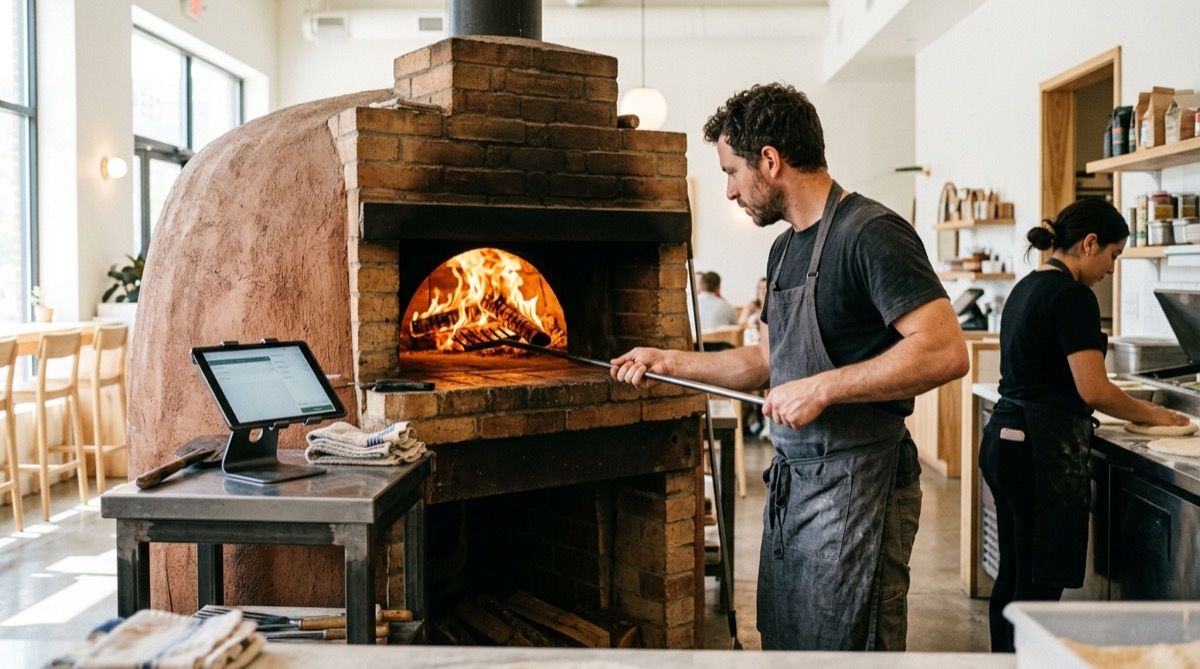
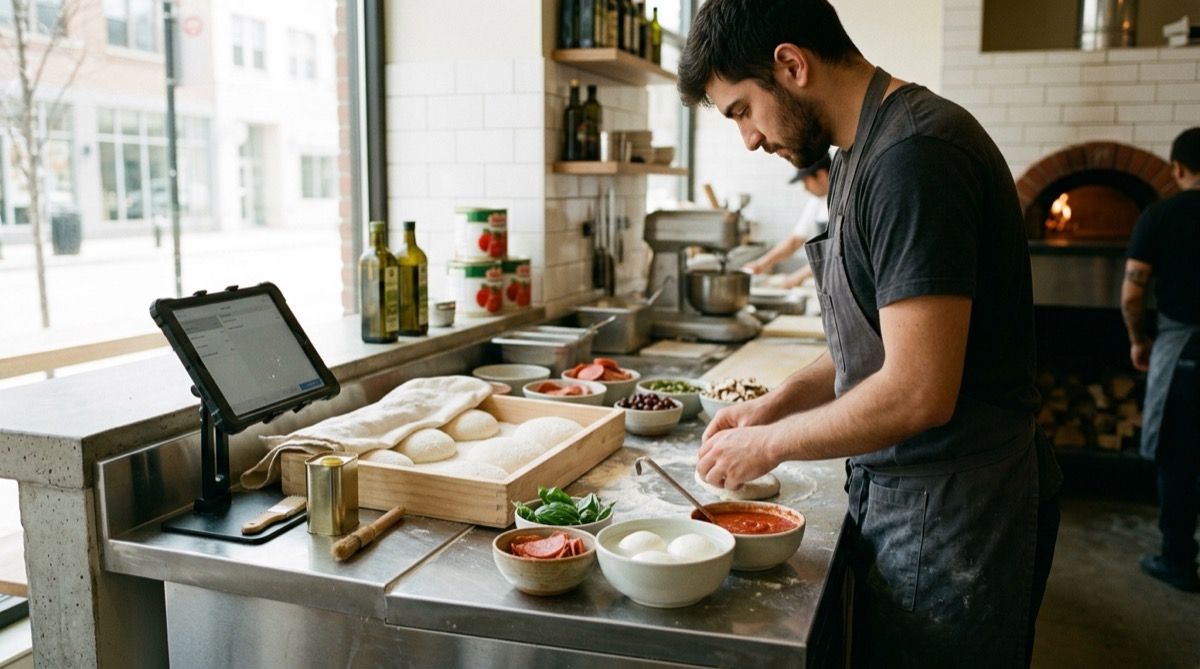
Daily Pizzeria Opening & Closing Checklist
Total time around 1 h 30 min (excluding oven preheat). The oven block goes first because a wood-fired oven needs 2–3 hours to reach baking temperature, so it must be lit right away.
Arrival and pre-checks
~5 min- 1 Disarm the alarm and switch on all lights 1 min
- 2 Turn on the extractor hood and HVAC 1 min
- 3 Review the day (reservations, events, expected delivery orders) 2 min
- 4 Hygiene and uniform check (hands, clean apron) 1 min
Oven — firing up and temperature
varies by oven type- 1 Light the wood-fired oven 2–3 h ahead to reach 430–480 °C (Neapolitan bakes in ~90 s) or preheat the electric/gas pizza deck oven 30–45 min (~300–350 °C deck) 2 h (wood) / 30 min (deck)
- 2 Check the oven pyrometer or thermometer 1 min
- 3 Clear ash and debris from the deck or stone 2 min
- 4 Prep wood, peel and brush 2 min
Dough and fermentation
~15 min- 1 Take the dough balls out of the proofing fridge (4 °C) and let them temper 2–4 h before service 3 min
- 2 Check the proof point (volume, not sticky) 2 min
- 3 Prep dusting flour and boards 3 min
- 4 Discard over-proofed balls or any over 3 days old 2 min
- 5 Log the dough prepped for the day 2 min
Ingredient mise en place
~15-20 min- 1 Pull and temper the mozzarella or fior di latte (kept at 4 °C in its whey) 3 min
- 2 Prep and portion the tomato sauce 3 min
- 3 Slice or grate the cheeses 2 min
- 4 Prep toppings (vegetables, cured meats) in labelled gastronorm pans 3 min
- 5 Set up the build station with a clean cutting board 2 min
Line and service
~10 min- 1 Turn on warmers or heated holding 1 min
- 2 Check the POS and order system 2 min
- 3 Prep delivery boxes and takeaway supplies 2 min
- 4 Review menu availability 2 min
- 5 Quick team briefing 3 min
Temperature checks
~5 min- 1 Log refrigeration units (≤4 °C) 1 min
- 2 Log the freezer (≤-18 °C) 1 min
- 3 Log the dough fridge (~4 °C) 1 min
- 4 Log the mozzarella in its whey (~4 °C) 1 min
- 5 Log the oven temperature before the first order 1 min
Cleaning
throughout the day and at close- 1 Clean and sanitize the build surfaces 3 min
- 2 Wash utensils, peels and boards 3 min
- 3 Empty trash bins 2 min
- 4 Run the cleaning and sanitizing plan for the dough area 3 min
- 5 Mop floors 3 min
Close and cash-up
~20 min- 1 Shut the oven down safely and let it cool 5 min
- 2 Cover and date-label leftover dough, mozzarella and sauce 3 min
- 3 Cash-up and close the POS 4 min
- 4 Final round of fridge temperatures 2 min
- 5 Take out the trash, arm the alarm and lock up 5 min
A typical pizzeria opening checklist
The pizzaiolo logs in with a PIN, views only tasks for their area such as dough proofing and oven cleaning, and signs off when each shift block closes. You track compliance from your dashboard, ensuring standards are met without visiting the pizzeria.
Pizzeria Da Mario · Kitchen
Kitchen and oven opening
due 12:30- Light wood‑fired oven (target 450°C)
- Preheat electric deck oven to 300–350°C
- Log fridge temperature (4°C)
- Pull dough balls for tempering (2 h)
- Check mozzarella dates & rotate
Designed for the pizzeria kitchen
Four reasons why teams switch from paper checklists.
Never forget the oven or dough
Timlup’s timed checklists remind you to light the wood‑fired oven hours ahead and pull dough balls for tempering right on schedule.
Signed temperature logs
Record oven and fridge temperatures with a PIN—each entry captures who did it, when, and the exact reading.
FIFO rotation for dough & mozzarella
Built‑in date checks help you use older dough balls and mozzarella first, cutting waste and keeping quality high.
Multi‑location & delivery control
Run the same checklist across all your pizzerias, or add a dedicated pre‑delivery check for takeaway orders.
Pizzeria task checklist questions
Answers to the most common questions from pizzeria owners and kitchen leads.
What should I do when opening a pizzeria in the morning?
What temperature should a wood‑fired pizza oven be?
How long should I preheat an electric pizza deck oven?
How long do I need to temper dough balls before service?
How long does pizza dough last in the fridge?
How should I store fresh mozzarella or fior di latte?
Which temperatures should I log in a pizzeria?
Does Timlup work for HACCP compliance?
Can I use Timlup across multiple pizzerias?
How does the PIN signature work?

John Guerrero
Founder of Timlup · Founder of ChefBusiness
15+ years working on business operations and process digitisation. Behind Timlup, ChefBusiness and AI Chef Pro. These guides capture the daily-control procedures I see working in operations-heavy businesses across Spain.
More on restaurants
Back to the hub or explore the other cluster types.