Bar opening checklist — 22 tasks step by step, signed with a PIN
The bar is the heart of the pub: if the coffee machine isn't at temp or the lines aren't purged, the first pint and first coffee come out wrong. This is the complete, ordered, digitisable opening routine.
35-50 min opening Verified technical data Signed food-safety records, at hand
What do you do when opening the bar?
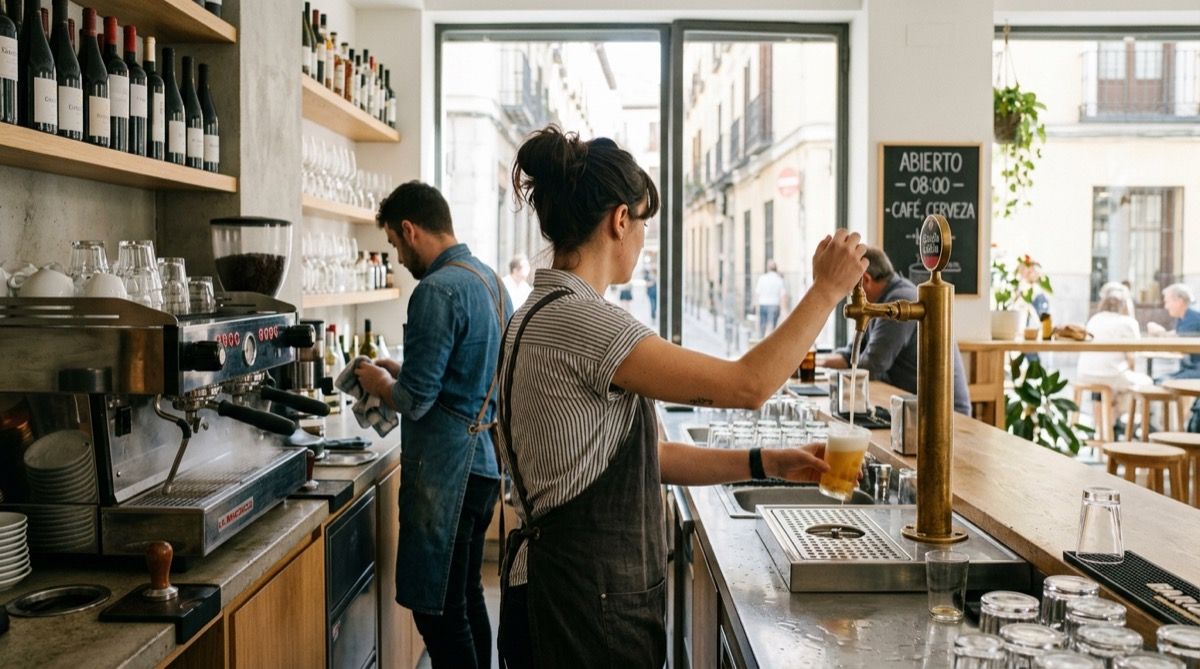
Opening a typical British pub takes 35–50 minutes, and the two slowest bits set the pace. The espresso machine needs a solid 15–20 minutes to reach 88–92 °C and build 8–9 bar of pressure. Meanwhile, the draught system demands attention: you must purge the line, pull and discard the first pint to clear stale beer, and check that the cellar is holding 11–13 °C (kegs at 3–6 °C) with the CO₂ regulator set to 12–14 PSI.
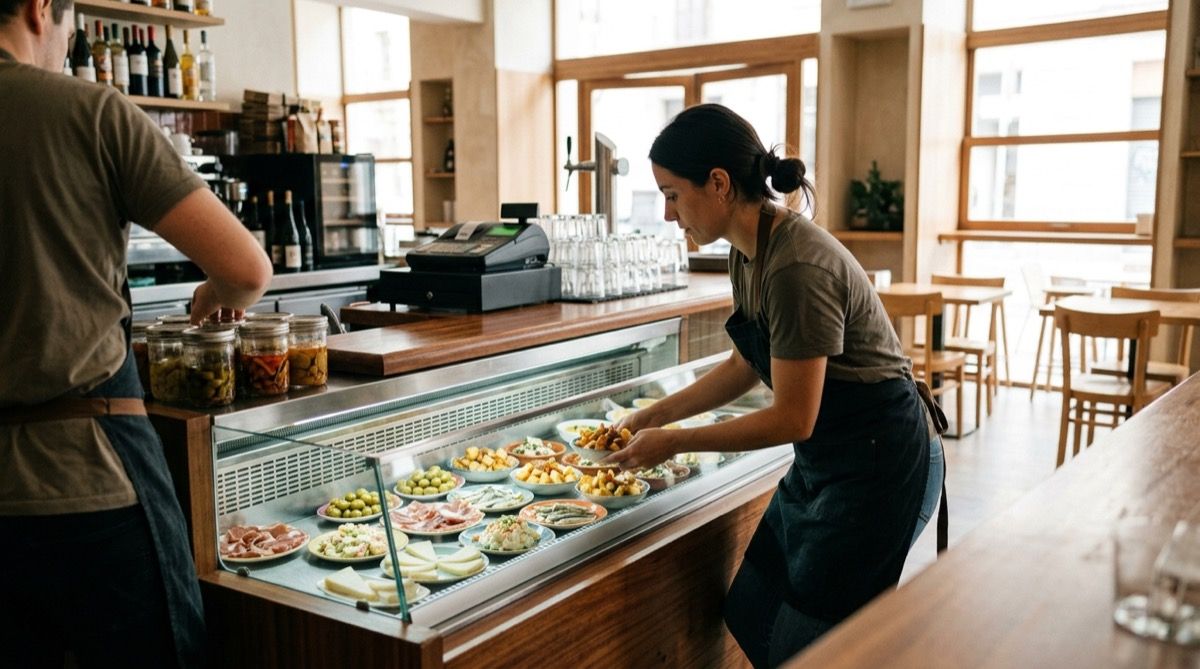
A smooth open runs in blocks: arrival and prep, coffee and draught, chilled food and fridges, till, outdoor seating. Food safety is non-negotiable—your chilled display must sit at ≤5 °C (legal maximum 8 °C, but aiming for 5 °C is best practice). Check bottle coolers and drinks fridges too. If you keep any hot food, hot-holding must stay above 63 °C, but most pub menus are chilled so the cold chain is your main focus.
Paper checklists end up crumpled behind the till; Timlup puts every task on the bar tablet exactly when it's due. Tap to tick, sign with a PIN, and the app records time, temperature and who did it. It's an honest way to document what you choose to record—not a magic certificate. You'll spot trends and keep a tidy record that mirrors the FSA's Safer Food Better Business (SFBB) approach, without ever pretending to be inspection-ready.
Opening the bar, step by step
Coffee machine, taps and display ready: every task signed from the tablet.
The 22 bar opening tasks, ordered by block
Total estimated time 35-50 min. The coffee machine and draught lines start first (warm-up and purge); display, fridges and till run in parallel.
Arrival and prep
5 min- 1 Unlock, disarm alarm, turn on bar and floor lights 1 min
- 2 Turn on extractor, HVAC and exterior sign 1 min
- 3 Review the day: bookings, events, team absences, expected deliveries 2 min
- 4 Uniform and hands check: clean apron, wash hands 1 min
Coffee machine and draught
15-20 min — starts first (warm-up and purge)- 1 Turn on espresso machine (needs 15-20 min to stabilise) 1 min
- 2 Check pump pressure 8-9 bar and group temperature 88-92 °C 1 min
- 3 Purge groups and steam wand; calibrate grinder and pull a test shot 5 min
- 4 Check draught CO₂ pressure (~12-14 PSI) and cellar/keg temperature (cellar 11-13 °C, kegs 3-6 °C) 2 min
- 5 Purge the beer lines: pull and discard the first pint of stale beer 2 min
- 6 Pull a test pint: head, gas and temperature correct; chill glassware 2 min
- 7 Refill ice well and bin; check glassware is clean and dry 2 min
Chilled food display and fridges (food safety)
10 min — in parallel with the coffee machine- 1 Turn on chilled food display and set up; name and allergen labels visible 3 min
- 2 Log chilled food display temperature (aim ≤5 °C, legal max 8 °C) 1 min
- 3 Restock bottle coolers and drinks fridges; log temperature (3-6 °C) 3 min
- 4 Log bar fridge (≤5 °C) and freezer (≤−18 °C) temperatures 2 min
- 5 Check probe thermometer and any hot-holding (≥63 °C if applicable); log incidents 1 min
Cash and till
5 min- 1 Cash open: count float (£100-150) and enter opening balance in the till 3 min
- 2 Turn on till and card reader; check connectivity and receipt paper 1 min
- 3 Verify menu and daily availability loaded in the till 1 min
Outdoor seating
10 min- 1 Sweep and check the outdoor area for mess and trip hazards 3 min
- 2 Put out tables and chairs; secure umbrellas checking stability 5 min
- 3 Set out menus, ashtrays and napkins; wipe surfaces down 2 min
This simple on their bar tablet
The bartender enters with a PIN, sees only the tasks of their time slot and signs at close. You control compliance from your panel without being at the location.
The Square Bar · Bar
Opening — Coffee and draught
due 08:00- Turn on machine and wait for stable temp
- Check 8-9 bar and 88-92 °C
- Check CO₂ and cellar/keg temperature
- Purge lines: discard first pint
- Pull test pint and chill glassware
Paperless bar opening — no doubts, no slip-ups
Three levers that change the morning set-up at your bar.
Every technical parameter, signed
Coffee machine pressure and temperature, draught CO₂ and food-safety temperatures are recorded with time and bartender. Signed and at hand in minutes.
Optimal order, every shift
Tasks appear in their slot. Coffee and draught first, display and fridges in parallel, till and outdoor seating after. No paper, no relying on memory.
Visibility from anywhere
Real-time bar traffic-light. If it's still red at 8:30, you call. No need to walk into the pub every morning.
Common bar opening questions
What owners and bartenders ask us most about the morning bar set-up.
How long does it take to open a bar in the morning?
How do you purge the beer line at opening and why discard the first pint?
What temperature and pressure should draught beer be?
What pressure and temperature should the coffee machine be?
What temperature should the chilled food display be for food safety?
How much cash float to leave in the till?
How do you set up outdoor seating at opening?
What do you log first in the opening food-safety check?

John Guerrero
Founder of Timlup · Founder of ChefBusiness
15+ years working on business operations and process digitisation. Behind Timlup, ChefBusiness and AI Chef Pro. These guides capture the daily-control procedures I see working in operations-heavy businesses across Spain.
More on bars
Back to the hub or explore the other cluster types.