Café opening checklist — 30 tasks step by step, signed with a PIN
Opening is the critical moment of the day: if the espresso machine isn't at temp or the displays aren't logged, the rest of the shift drags the error. This is the complete, ordered, digitisable routine.
45-60 min opening Verified technical data Signed HACCP records, at hand
What does a barista do when opening the café?
Opening a café in Spain takes 45 to 60 minutes in a neighbourhood spot and 60-90 minutes in a specialty café or one with an in-house oven. The bottleneck is the espresso machine, which needs 20-30 minutes to reach stable pressure and temperature — so it's turned on first and the other blocks run in parallel.
The routine is split into 7 blocks: arrival and prep, machine and grinder, cups and bar, milks, display and oven, HACCP log, and cash/POS. Each block has concrete tasks with verifiable technical parameters: pump pressure 8-9 bar, group temperature 88-92 °C, espresso ratio 18 g → 36 g in 25-30 s, refrigerated displays ≤4 °C, freezer ≤−18 °C.
Done on paper, logs get wet, lost or signed late. With Timlup, each task appears in its time slot, gets ticked on the bar tablet, and is signed with the barista's PIN, exact time and temperature when applicable. Everything stays signed, dated and at hand.
A café opening, step by step
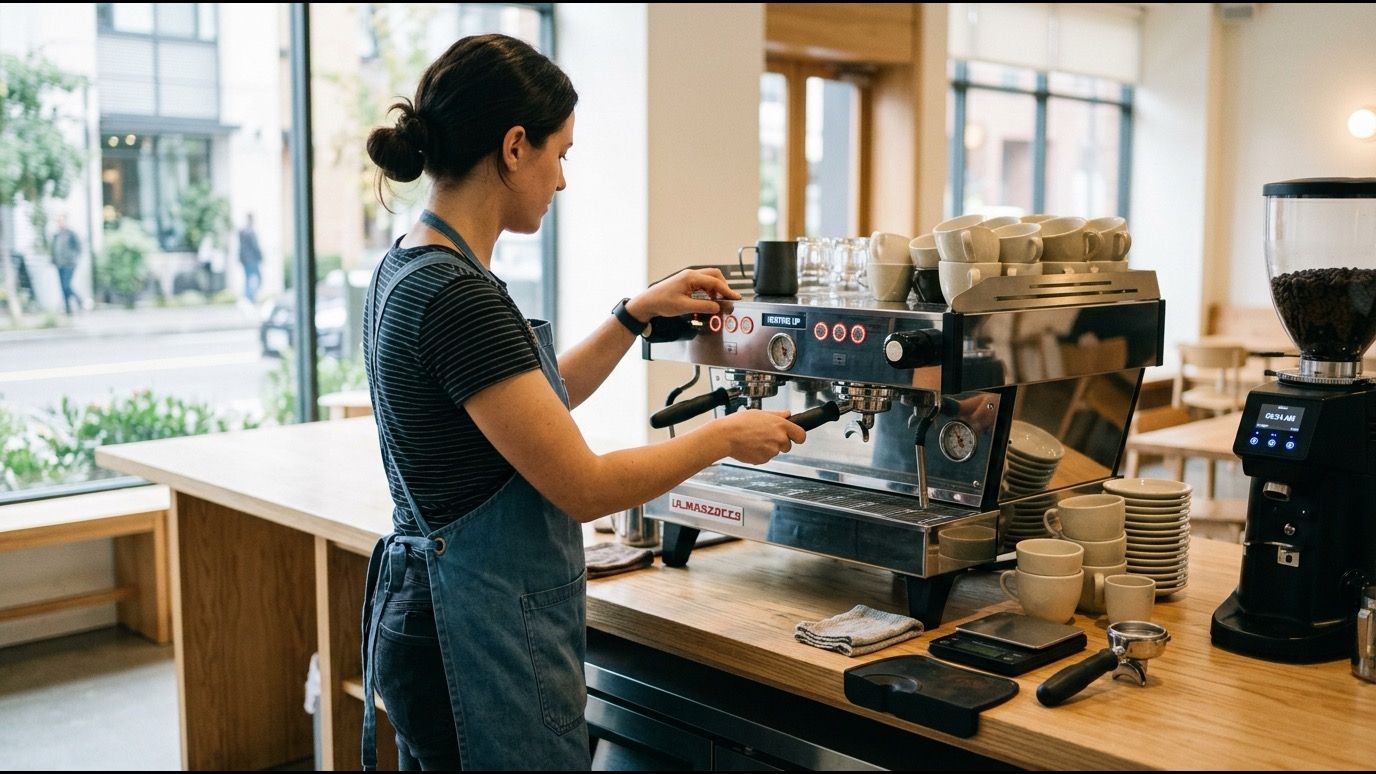
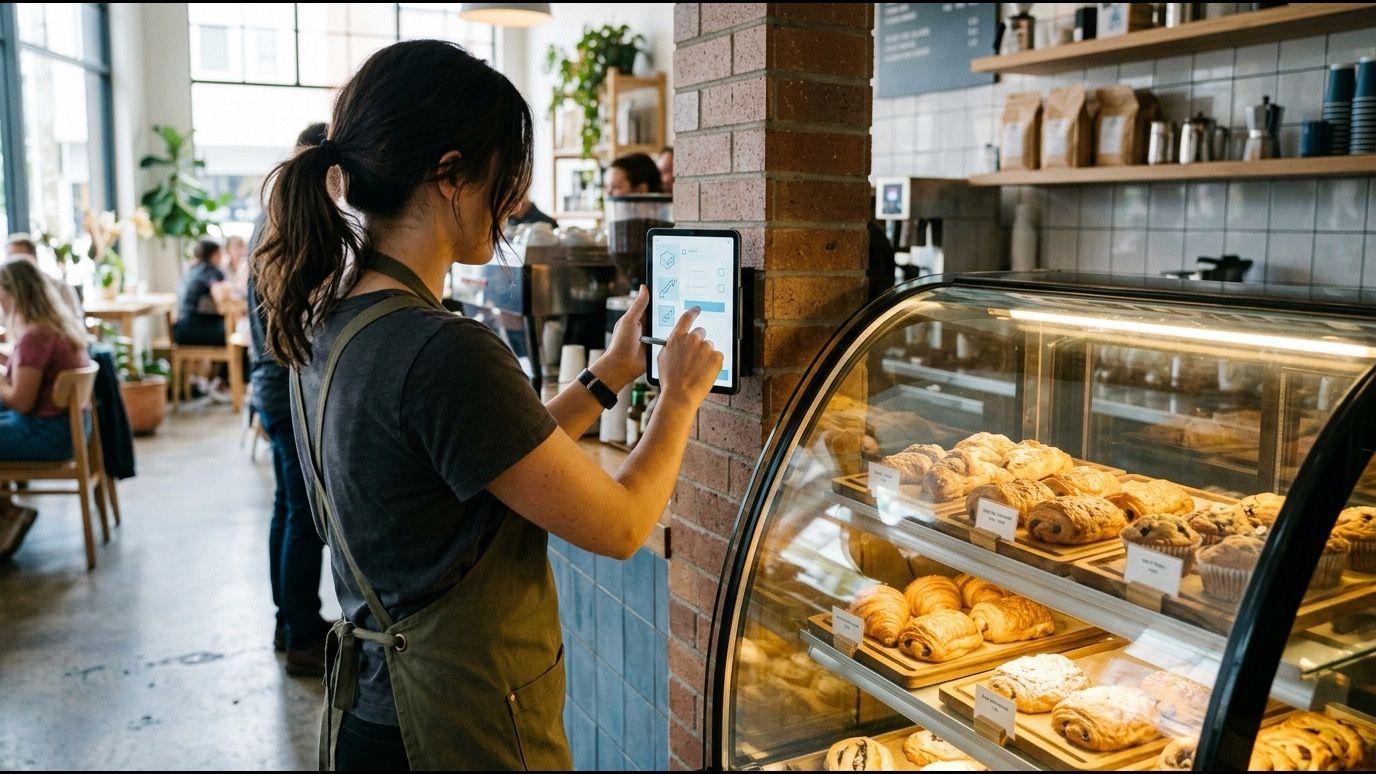
Switching on and calibrating the espresso machine, logging the display temperature: every task is signed off from the bar tablet.
The 30 opening tasks, ordered by block
Total estimated time 45-60 min. Three blocks (machine, display, HACCP) run in parallel using the machine's warm-up.
Arrival and prep
5 min- 1 Unlock, disarm alarm, turn on bar and dining lights 1 min
- 2 Turn on extractor and HVAC 1 min
- 3 Review the day: bookings, events, team absences, expected deliveries 2 min
- 4 Uniform and hands check: clean apron, wash hands, hair tied back 1 min
Espresso machine and grinder
15-30 min — starts first (long warm-up)- 1 Turn on espresso machine (needs 20-30 min to stabilise) 1 min
- 2 Check pump pressure: 8-9 bar; boiler pressure ≤1 bar 1 min
- 3 Check group temperature: 88-92 °C (ideal 90 °C) 1 min
- 4 Purge all groups and steam wands 2-3 seconds 1 min
- 5 Light water-only backflush (5 cycles) on machines with 3-way valve / E61 group 5 min
- 6 Clean portafilters, baskets and shower screens with microfiber; dry 3 min
- 7 Refill fresh beans in grinder hopper (empty old beans first) 2 min
- 8 Calibrate grinder: 18 g dose → 36 g liquid in 25-30 seconds (1:2 ratio) 5 min
- 9 Pull seasoning shots until taste is balanced 3 min
- 10 Check steam wands: purge, jug test, dedicated clean cloth 2 min
Cups, glassware and bar
5 min- 1 Place pre-warmed cups on the machine per shop protocol 2 min
- 2 Restock take-away cups, lids, sleeves, stirrers, napkins, sugar/sweeteners 2 min
- 3 Wipe down the bar, drip tray and POS receipt paper 1 min
Milks
5 min- 1 Restock whole and semi milk in bar fridge; check expiry and temp ≤4 °C 2 min
- 2 Restock barista-grade plant drinks (oat, soy, almond) — must foam well 2 min
- 3 Wash and dry milk jugs; dedicated jug for plant-based to avoid allergen cross-contact 1 min
Display and oven
10 min — in parallel with machine warm-up- 1 Turn on refrigerated (≤4 °C) and/or hot (30-60 °C) pastry display 1 min
- 2 Preheat oven (180-200 °C) and bake the first batch of pastries 8 min
- 3 Set up display: pastries forward, name and allergen labels visible, dedicated tongs 1 min
Temperature log
5 min — first mandatory log of the day- 1 Log temperature of main cold room (≤4 °C) 1 min
- 2 Log temperature of refrigerated display (≤4 °C) 1 min
- 3 Log temperature of freezer (≤−18 °C) 1 min
- 4 Verify thermometers and log incidents (noise, frost, anomalies). Keep logs for 1 year 2 min
Cash, POS and card reader
5 min- 1 Cash open: count float (€100-200 in small bills and coins) and enter opening balance in POS 3 min
- 2 Turn on POS, card reader, verify connectivity, receipt paper and reader paper 1 min
- 3 Verify POS availability: daily products, offers, lunch menus loaded 1 min
This simple on their bar tablet
The barista enters with a PIN, sees only the tasks of their time slot and signs at close. You control compliance from your panel without being at the location.
Sun Café · Bar
Opening — Machine
due 08:00- Turn on machine and wait for stable temp
- Check 8-9 bar pressure and 88-92 °C temp
- Calibrate grinder 18 g → 36 g / 25-30 s
- Light water backflush (5 cycles)
- Pull seasoning shots and validate taste
Paperless opening — no doubts, no slip-ups
Three levers that change the morning routine at your bar.
Every technical parameter, signed
Pressure, temperature, espresso ratio and temperatures are recorded with time and barista. Signed and at hand in minutes.
Optimal order, every shift
Tasks appear in their slot. Machine first (it needs 20-30 min), display and temperature checks in parallel. No paper, no relying on memory.
Visibility from anywhere
Real-time bar traffic-light. If it's still red at 8:30, you call. No need to walk into the shop every morning.
Common opening questions
What owners and baristas ask us most about the most critical moment of the day.
How long does it take to open a café in the morning?
How long does a commercial espresso machine take to warm up?
What pressure and temperature should the espresso machine be at?
How do you calibrate the grinder each morning?
Do you need to backflush the machine daily?
What temperatures must cold rooms and displays be at for HACCP?
How much float do you leave in the cash drawer when opening?
Which plant milks should a café stock?
What goes first in the HACCP opening log?
Does a specialty café need its own checklist?

John Guerrero
Founder of Timlup · Founder of ChefBusiness
15+ years working on business operations and process digitisation. Behind Timlup, ChefBusiness and AI Chef Pro. These guides capture the daily-control procedures I see working in operations-heavy businesses across Spain.
More on cafés
Back to the hub or explore the other cluster types.