Bakery temperature control, without the paperwork
Log cream cake display, fridge, freezer and blast-chilling checks from your bakery tablet. Timlup helps you document what matters, in the order you choose.
Record opening, service and closing temps in seconds Probe placement guidance built in PIN-signed, time-stamped logs for cream, fillings and frozen goods
What does proper temperature control in a bakery actually involve?
In a patisserie where fresh cream, luscious custards and delicate fillings take centre stage, bakery temperature control is not just a box-ticking exercise – it is the single most important daily routine that keeps your customers safe and your reputation spotless. The science is straightforward but the stakes are high: bacteria that cause food poisoning thrive in the danger zone between 8 °C and 63 °C, which is why the Food Standards Agency requires every cream-filled masterpiece on your cold display to sit at 8 °C or below, with 4–6 °C being the widely recognised best practice for quality and safety. Blast chilling is equally critical for your cooked custards, which must plummet from above 63 °C down to a safe chilled temperature quickly – typically within 90 minutes – to halt bacterial growth before it can start, making fast, verifiable cooling a cornerstone of Safer Food Better Business compliance.
Your daily rhythm should be built around three simple but non-negotiable checkpoints: opening, mid-service and closing, when you use a calibrated probe to log the core temperature of your highest-risk products and every cold unit they depend on. The cream cake fridge temperature threshold for your display counter is 8 °C, yet aiming for that tighter 4–6 °C band gives you breathing room if the cabinet is opened frequently during a busy Saturday morning rush, while your walk-in chilled storage must hold steadily at 5 °C or below and your freezer at −18 °C or below. Goods-in checks are your first line of defence: reject any chilled delivery that arrives above 5 °C or frozen shipment warmer than −18 °C, and record the rejection just as diligently as you would a pass, because a gap in your records can undermine an entire week's worth of careful monitoring.
The paper log on the wall can get splattered with buttercream, and a forgotten reading leaves a hole in your history that an environmental health officer will notice, which is where a tool like Timlup helps you document, in an orderly way, whatever you choose to record – a recurring daily checklist with time-stamped entries that are PIN-signed straight from a bakery or counter tablet, building a tidy history you can scroll through in seconds. It will never certify you, guarantee compliance or hand you an inspection-ready folder, but it will faithfully hold every corrective action you jot down when a blast chiller runs slow or a display fridge edges towards 9 °C, giving you an honest, searchable record you can keep for at least a year without wrestling a soggy ring binder. When the FSA asks to see your temperature logs, pulling up a clean, time-stamped digital trail from Timlup lets you show the real work you do every day, without exaggeration or pretence.
Temperature control, in pictures
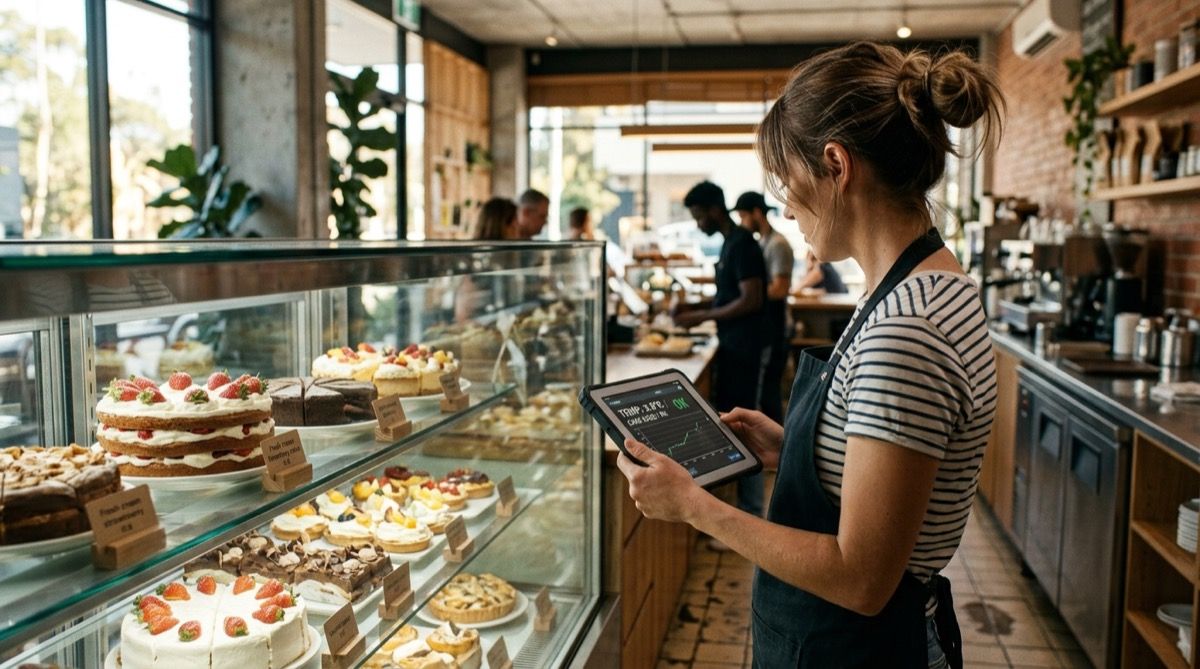
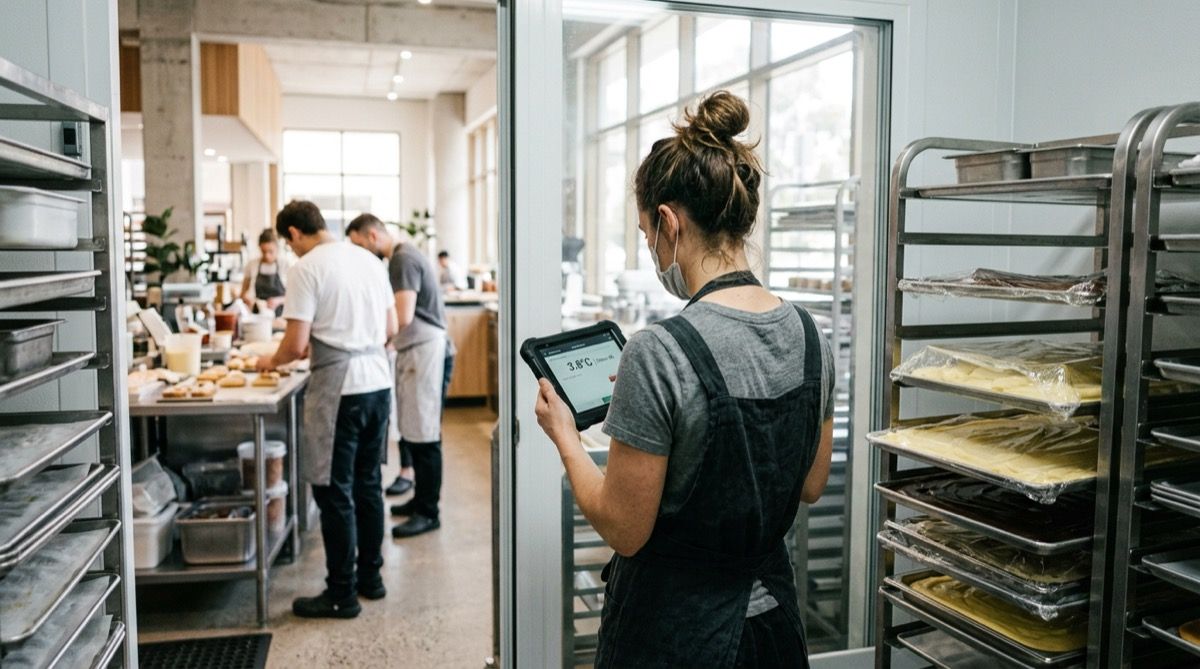
From the cream display to the cold room: every reading signed from the tablet.
A bakery's temperature control points, by time of day
Total estimated time 10-14 min a day across opening, service and closing. Ranges per UK FSA guidance and Safer Food, Better Business. Temperature-logging tasks are marked.
Opening & display set-up
6 min — first log of the day, before any cream goes on show- 1 Check and log the refrigerated cream cake cold display (≤8 °C; best practice 4-6 °C) before loading it 1 min
- 2 Check and log the fridge/cold room holding cream, fillings, dairy and pasteurised egg (≤5 °C) 1 min
- 3 Verify probes and thermometers work and are calibrated; log any issues (frost, noise, poorly sealed doors) 1 min
- 4 Load the display with cream and fillings only once it is in range; keep them out for as little time as possible 2 min
- 5 Probe the core temperature of freshly loaded high-risk product with a clean probe (≤5 °C) 1 min
Through the day
3 min — service check, especially at peak times- 1 Re-check the cream/filling display after repeated door openings (≤8 °C; brief ~3 °C tolerance if it recovers fast) 1 min
- 2 Log the rapid cooling of cooked custards (crème pât, pastry cream): from above 63 °C down to chilled within ~90 min, in a blast chiller or ice bath 1 min
- 3 Visually confirm no cream or filled product is left out of cold equipment during service 1 min
Cold room & freezer
2 min — negative cold and storage of doughs and frozen product- 1 Check and log the freezer for doughs and frozen product (≤−18 °C) 1 min
- 2 Label opened fresh cream and fillings with the date and store in the cold room at ≤5 °C; log the temperature 1 min
Goods-in
2 min — only on delivery days, when chilled or frozen stock arrives- 1 Probe and log the temperature of chilled deliveries on arrival (dairy, pasteurised egg, cream: ≤5 °C) 1 min
- 2 Check and log the temperature of frozen deliveries on arrival (doughs, product: ≤−18 °C), probing between boxes without piercing the packaging 1 min
Closing
3 min — last log of the day, confirms the cold held all shift- 1 Check and log the closing temperature of the cream cake display (≤8 °C) 1 min
- 2 Check and log the closing temperature of the cream/filling fridge (≤5 °C) and the freezer (≤−18 °C) 1 min
- 3 If any unit went out of range during the day, log the incident and the corrective action taken (move product, fitness check, call technician) 1 min
Your daily checklist, right on the bakery tablet
The team completes and PIN-signs each check; you see it all from your panel.
La Dulce Bakery · Counter
Opening — Temperatures
due 08:30- Cream cake cold display ≤8 °C
- Cream & fillings fridge ≤5 °C
- Probes calibrated, no issues
- Freezer (doughs) ≤−18 °C
- Core probe on loaded display ≤5 °C
Three ways Timlup helps with temperature logging
Without ever pretending to be a compliance tool.
No more lost paper logs
Digital checklists stored securely. Find any cream, fridge or freezer record in seconds, and keep them for the recommended year.
Guided checks, every time
Each task can include a short note on probe placement or target range, so the team never guesses with a tray of fresh cream.
Accountability without the hassle
Every check is PIN-signed and time-stamped. You see who logged the blast chill, who checked the display, and when.
Your temperature logging questions, answered
Straightforward answers for bakery and patisserie owners and managers.
How often should I log temperatures in my patisserie?
What temperature must my cream cake cold display be?
What temperature should my freezer run at for patisserie goods?
Where exactly should I place the probe in an open chilled display?
How do I store opened fresh cream and leftover fillings?
What is blast chilling (rapid cooling) and why must I log it?
How do I check chilled and frozen deliveries properly?
How long must I keep temperature records?
What corrective action should I take if a unit goes out of range?

John Guerrero
Founder of Timlup · Founder of ChefBusiness
15+ years working on business operations and process digitisation. Behind Timlup, ChefBusiness and AI Chef Pro. These guides capture the daily-control procedures I see working in operations-heavy businesses across Spain.
More on bakeries
Back to the hub or explore the other cluster types.